Project Description
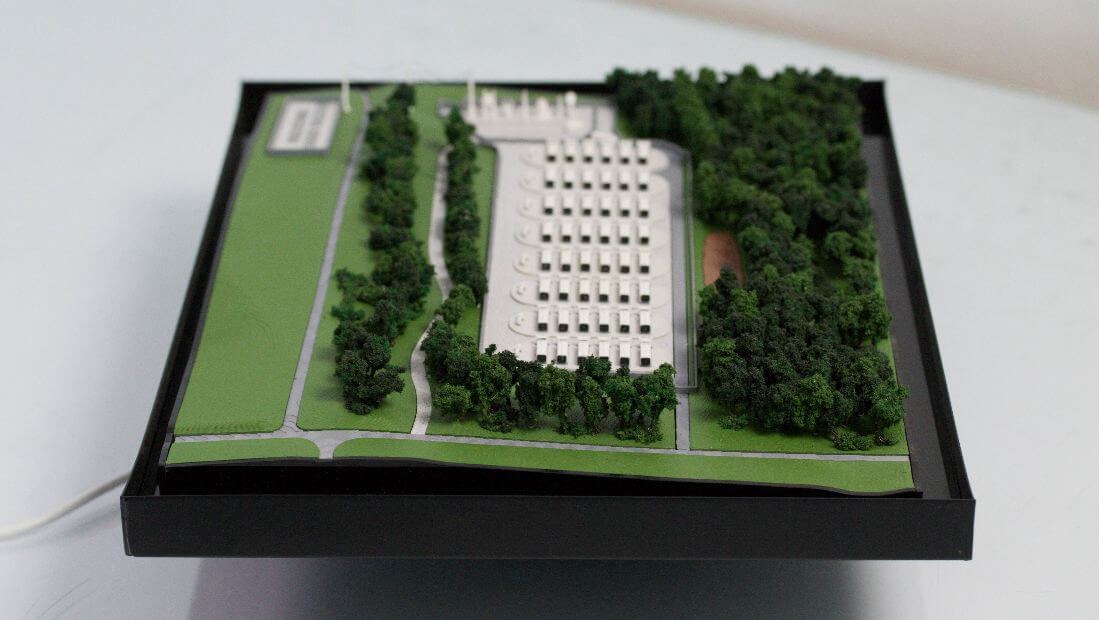
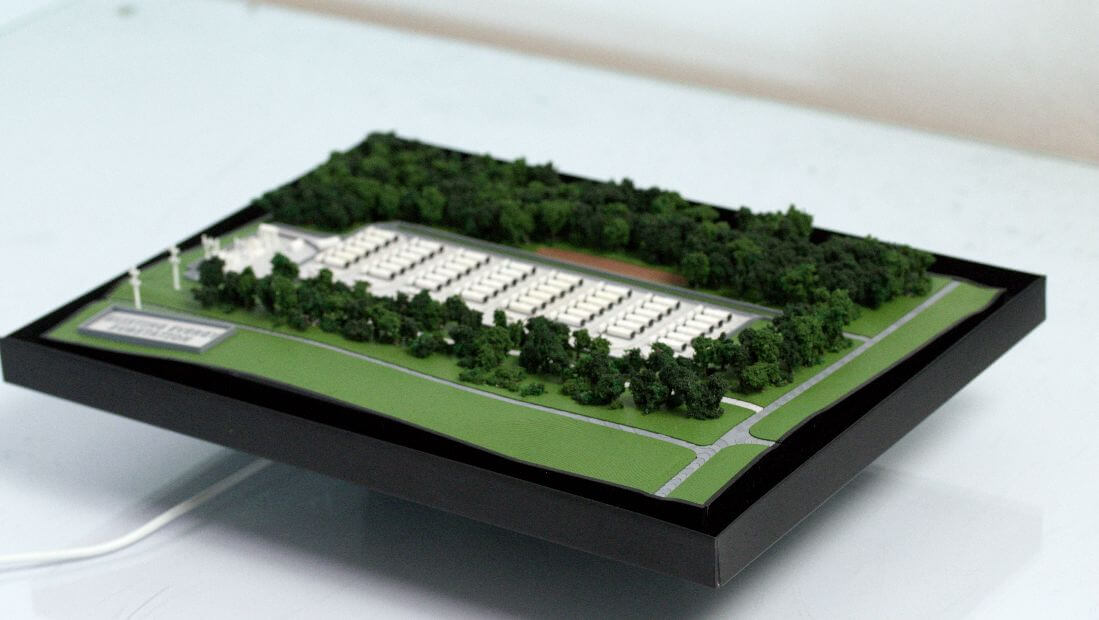
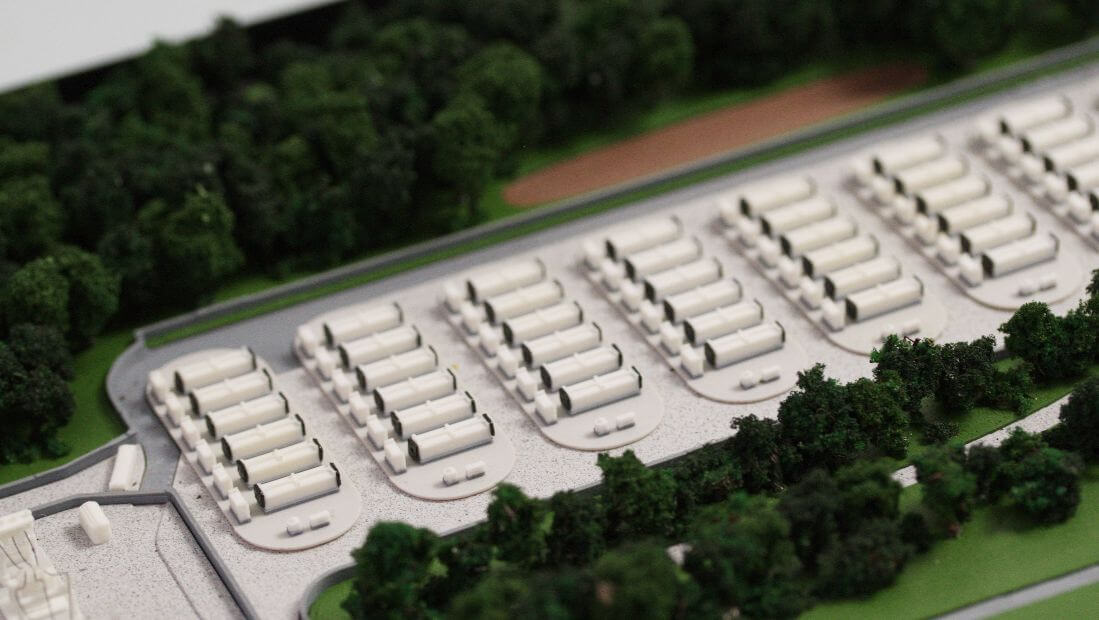
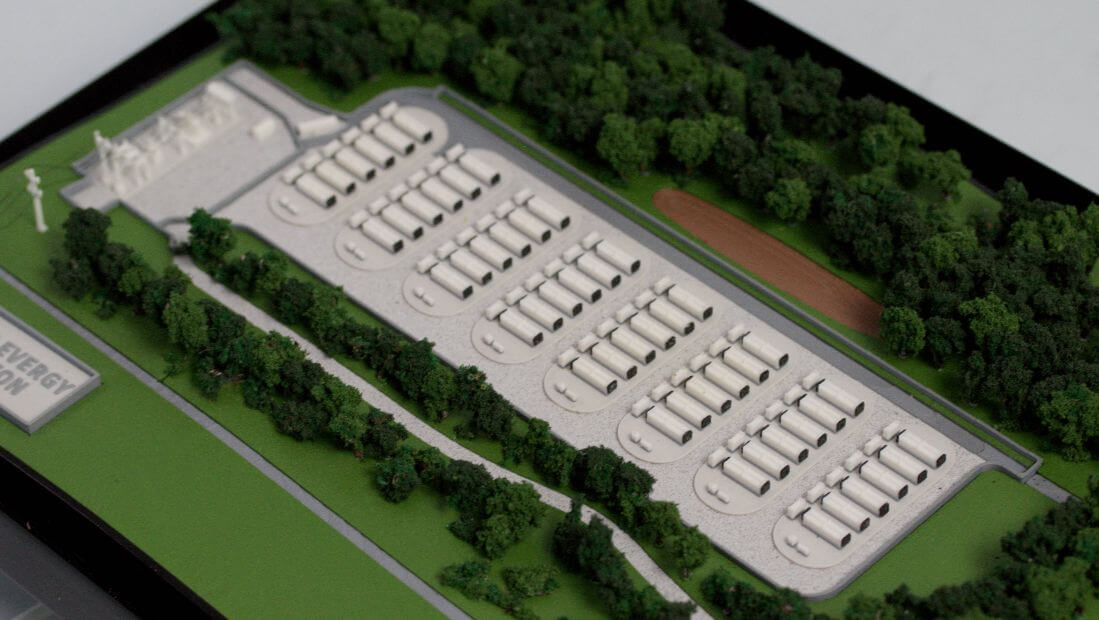
This architectural model provides a visualization of a Battery Energy Storage System (BESS), illustrating the seamless integration of industrial technology within a natural environment. The model features a clean, systematic layout of modular storage units, meticulously arranged in a central grid.
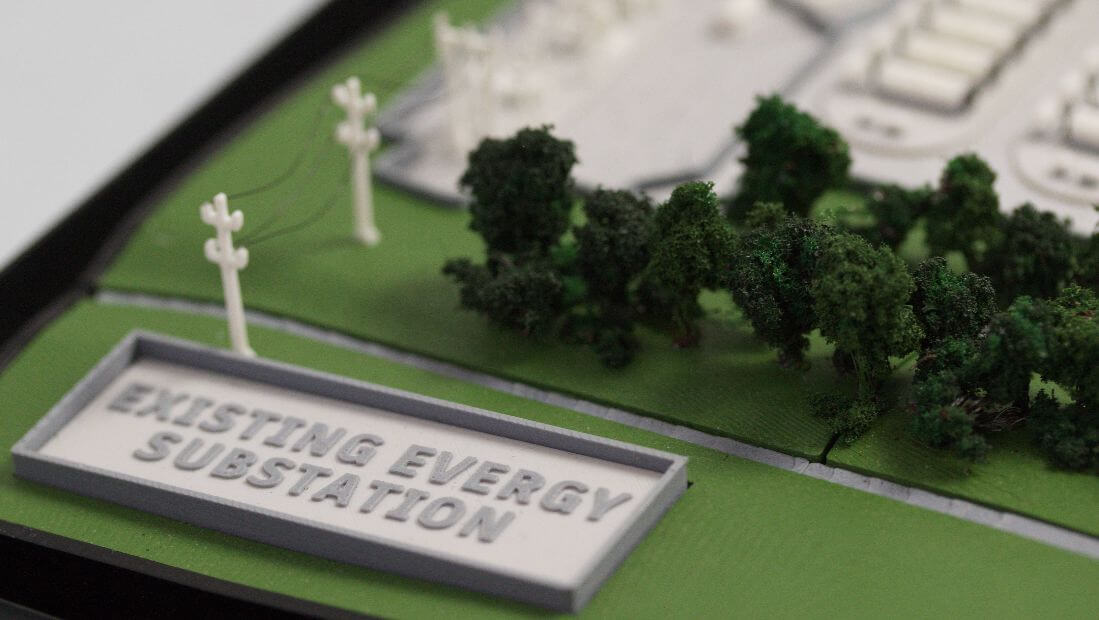
These units represent the core battery stacks, designed for scalable energy storage and grid stabilization. A dedicated substation area at the far end serves as the critical interface for power conversion and grid connectivity.
A standout feature of this presentation is the emphasis on sustainable landscaping. The industrial core is framed by dense, realistic miniature foliage and manicured green spaces.
Constructed with a minimalist palette of whites, greys, and vibrant greens, the model serves as a powerful communication tool. It translates complex electrical engineering into a tangible, human-scale vision, making it ideal for stakeholder presentations, urban planning discussions, or environmental impact assessments.

An architectural BESS model transforms an abstract technical concept into a tangible vision, facilitating efficient communication between developers, investors, and authorities. It allows for the precise visualization of the physical footprint and logistical flows, offering a three-dimensional perspective that 2D plans simply cannot fully convey. Consequently, decisions regarding equipment placement and spatial optimization can be made with much higher speed and technical accuracy.
From an aesthetic and ecological standpoint, the model serves as an essential tool for demonstrating the harmonious integration of industrial technology into the natural landscape. By highlighting green buffers and landscaped areas, the project becomes far more approachable for local communities, reducing resistance to energy infrastructure. It acts as a powerful marketing asset that underscores a commitment to an aesthetically responsible energy transition.